The old order isn’t coming back, traditional leadership development is not enough…

February 18, 2026
The End of the World (Probably Not)
A few mornings ago, I caught myself doing something I suspect I’m not alone in.
I was halfway through my first cup of coffee, telling myself I was having a slow morning. But my thumb was moving at a different pace entirely. Article after article. Thread after thread. Every few scrolls, another confident declaration about how everything is changing faster than we can handle and what technology is doing to work and to the very concept of human usefulness.
When you sit where I sit — as an executive, coach, and investor — there’s a quiet pressure to keep up and stay current. To not be the person caught flat-footed while something meaningful shifts underneath the economy.
But somewhere between the twelfth and sixteenth extreme headline, something felt…off.
I was getting skeptical, yes. But more than that, I just questioned the certainty of it all.
Never Trusting Predictions
If you pay close attention, the defining tone of this moment isn’t just urgency. It’s conviction. Everyone seems to know exactly what happens next. Entire categories of work are either doomed or newly supercharged. The confidence is striking, and a bit (okay, very) concerning.
To be clear, something real is happening. You can see it in boardrooms, ads, products, services, media, etc. Teams are reassessing workflows. Tasks that once felt safely human are being re-examined. Skills that looked durable are being quietly repriced. And the way everything is getting made is shifting fast.
This is not a fad.
Certainty Isn’t Always Useful
But what I’m noticing in my own work is that the bigger risk right now may not be the speed of change. It may be our relationship with certainty and how it impacts how we’re navigating the world. It feels a bit like everyone is sprinting through a large dark room to be the first to find the prick of light in the distance — acting as if this room is like all the ones they’ve sprinted through in the past. And yet, it’s not. This room is different.
In moments of rapid change, the human instinct is to reach for what has worked before. We look for patterns. Leaders especially feel the pull to sound decisive even when the ground is still moving. I feel that pull myself more often than I’d like to admit.
But the longer I spend in conversations with leaders and teams, the more convinced I become that premature certainty is a vicious trap. Because at this moment, when everyone is absolutely CERTAIN that everything is going to explode, our field of vision narrows, experimentation feels riskier than it should, and we all disengage a bit more every day.
It’s a downward spiral that’s good for precisely no one.
Starting With Belief
One of the more under-discussed risks in moments like this is not that everything changes. It’s that smart, thoughtful humans start to assume the game has already been decided somewhere offstage. That’s not a technology problem. That’s a mindset problem.
What I’m seeing from the leaders navigating this moment well is actually way more fundamental than flashy. They’re running small experiments instead of making sweeping declarations. They’re staying close to real customer problems. And they’re helping their teams make sense of what’s actually changing in their environment or industry instead of letting headlines, alone, set the emotional tone.
In other words, they’re staying in motion because they believe there’s a path through this.
We don’t control the pace of model improvements. We don’t control capital markets. We definitely don’t control which apocalyptic headline trends next week. But we do control how we show up inside the uncertainty.
So is this the end of the world?
Probably not. At least not today.
Is it a meaningful inflection point that will reward the attentive and unsettle the passive? I think so.
For my part, I’m trying to hold a quieter stance in the middle of the noise — less prediction, more observation; less certainty, more thoughtful experiments; less “end of the world,” and more “what’s the most useful thing worth building next?”
The future rarely belongs to the loudest forecasters. More often, it belongs to the people who stayed curious and kept moving, all with a sense of belief.
Posted By
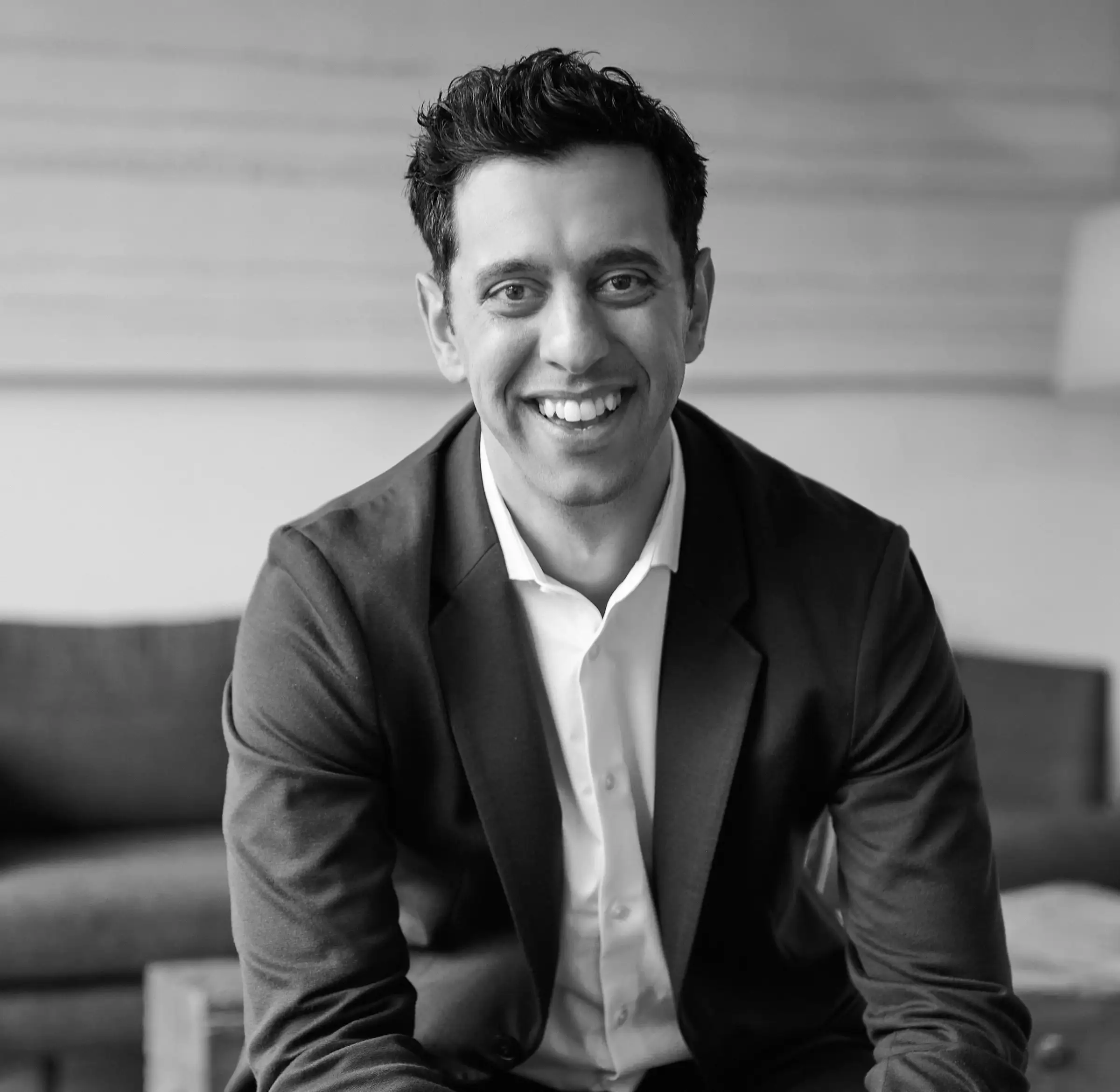
Victor Saad
Founder & Chairman
In 2012, Victor founded Experience Institute after designing his own Master’s through 12 work experiences in 12 months. Since then, he’s worked with thousands of students and professionals to grow their careers through engaging curriculum and meaningful experiences. He’s also a Lecturer in Design at Stanford and a Forbes 30Under30 recipient in the field of education. Today, he serves as Ei's Chairman of the Board and Partner at NextGen Growth Partners.
The Spark You’ve Been Looking For
Visit our store to find award-winning education tools used by individuals and teams around the world.