The old order isn’t coming back, traditional leadership development is not enough…

May 27, 2026
The Only Thing Worth Being Certain About
Yesterday I stumbled across a clip from Stephen Colbert’s Big Questions with Even Bigger Stars. The premise is exactly what it sounds like: Stephen Colbert and a celebrity lie on a blanket, ostensibly stargazing, and ask each other life’s enormous questions. They pretend they're serious but there's always an implied wink that acknowledges the spoof.
In his Big Questions episode with one of my all-time faves, Julia Louis-Dreyfus, Colbert turns to her and asks: “You think it’s possible to know anything for certain?”
JLD: “No, I don’t.”
Colbert: “Are you sure about that?”
JLD: “Yes.”
Then, realizing the contradiction, they say in unison: “Whoa.”
That comedic bit pretty much sums up how leaders, including me, are feeling right now. We're swimming in uncertainty. The basic assumptions about how our world operates no longer apply. We are seeing it in climate, technology, geopolitics, economics, the list goes on.
And yet many of us are still feeling pressure to sound certain and to project confidence.
Leading in discontinuity requires a different orientation entirely: not the pursuit of better answers, but the discipline of questioning the assumptions underneath the ones you already have. What if, rather than trying to achieve certainty, we got better at questioning what we've been treating as obvious?
Four Questions for Any Challenge
Here’s a simple sequence we use to help teams (including ours) get underneath the ideas they have started treating as obvious. You need a real challenge, about twenty minutes, and someone willing to go first.
Have one person describe a challenge the team is working on. Not just the headline, but the history, the stakes, the shape of it.
Ask each person to name one assumption the experts in that challenge are probably holding. Do not debate whether the assumptions are right or wrong. Just surface them.
As a group, identify one of these assumptions that, if it turned out to be wrong, would change everything about how you are approaching the challenge.
Then ask: what did the group see together that no individual could have seen alone? When you do this, you start to build the kind of intelligence that discontinuity requires: collective, rather than individual. It’s the seeing (and unseeing) that no individual can do on their own.
Here's what it looked like when we ran it a few weeks ago in our session, When Experience Becomes the Problem.
What Happened in the Room
We asked our attending senior leaders and L&D professionals to bring a real strategic challenge their most experienced leaders had not been able to crack.
One participant offered a challenge about two business units newly merged under one parent company: office and retail real estate. The problem felt familiar. Different cultures. Different ways of working. Different opinions about whose model was more sophisticated and whose approach should lead.
Then we asked the group to start naming assumptions. It can be a slightly awkward exercise at first, but they went with it. They named assumptions like these: that one group was more knowledgeable. That one side had the stronger future business model. That the situation was fundamentally an either/or.
Then the group was charged with identifying the one assumption that, if it turned out to be wrong, would change everything. And something opened up.
What if office and retail are not actually as different as everyone believes them to be?
When we change the assumptions, we change what’s possible.
The insight emerged from the friction between perspectives, from non-experts asking questions the experts had stopped asking. Collectively, we recognized that the issue may not be how to bridge a divide. The divide itself may have been overinterpreted from the start.
The person who offered the challenge left with a new set of insights to bring back to their team, and a bit of relief: maybe aiming for a single unified way of working wasn’t the right focus. Turns out, finding out you've been asking the wrong question is actually good news.
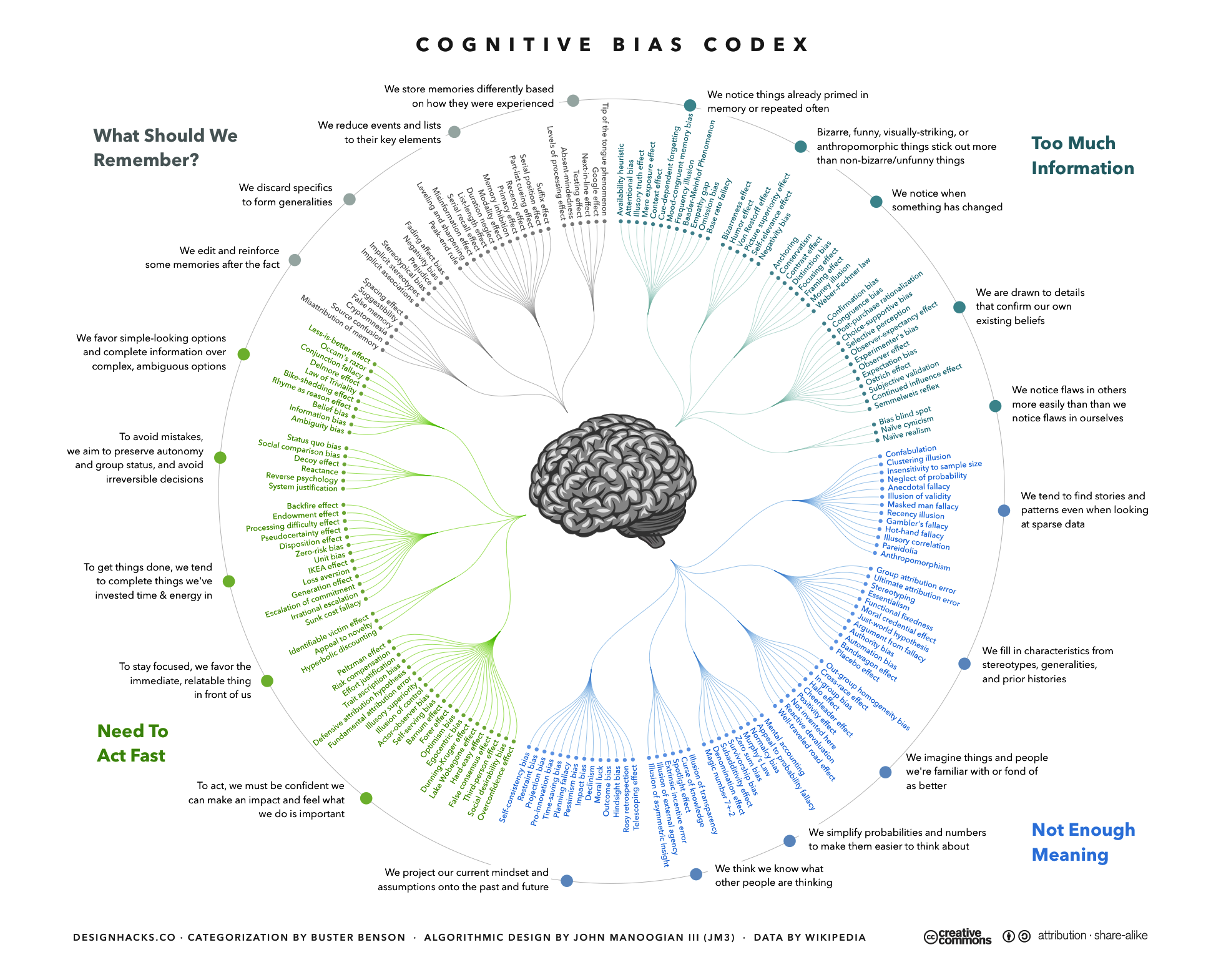
That is the thing about assumptions in a discontinuous environment. They feel obvious right up until someone says them out loud. If you want a sense of just how many assumptions are quietly running beneath any decision your team makes, this map is worth a long look. Our blind spots have names. And most of them are ones your whole industry shares.
When Twenty Minutes Isn’t Enough
The four questions exercise is a small move you can make at this moment, when the one thing we're certain about is that certainty is the wrong goal. It helps build the muscles of collective intelligence. We have been building out a lot more: single-day experiences for teams ready to question what they've stopped questioning (or never questioned at all), longer sprints with coaching support for teams working through specific strategic challenges, and year-long programs for building leaders’ capacity to lead in discontinuity.
For now, try the four questions. If the exercise surfaces something your team cannot work through alone, come talk to us about what to do with it.

Posted By
Erin Murphy
Director of Partnerships
Erin’s career (and, well, her life) has been shaped by a core belief: transformation happens through taking risks, connecting with others, and making sense of new experiences together. As Director of Partnerships at Experience Institute, she brings this philosophy to work every day, partnering with organizations to build cultures where people actively experiment to change how they work.
Before joining Ei, Erin spent a decade designing immersive, travel-based learning programs that pushed young adults beyond the classroom, first as Director of Student Impact at Rustic Pathways and then as Director of Programs at Verto Education. She holds a master’s from the Harvard Graduate School of Education. Her own experiential learning includes teaching at a university in Thailand for three years after college, training as a birth doula (though she’s only attended one birth so far), and next up, learning to ride a unicycle.
The Spark You’ve Been Looking For
Visit our store to find award-winning education tools used by individuals and teams around the world.